
Table of Contents
Salivary glands are vital organs for oral health. This plays an important role in digestion and helps protect the body against infections When they are blocked, you may develop an infection or form stones or tumours. This can quickly get quite unpleasant and may lead to serious complications if left untreated.
Salivary gland disorders can often be managed with medication and other non-invasive measures. Surgery is required in some cases. If you notice symptoms early, appropriate medical care can help prevent complications and improve treatment outcomes.
Here are the seven symptoms of salivary gland disorders that might require surgical treatment.
What are Salivary Gland Diseases?
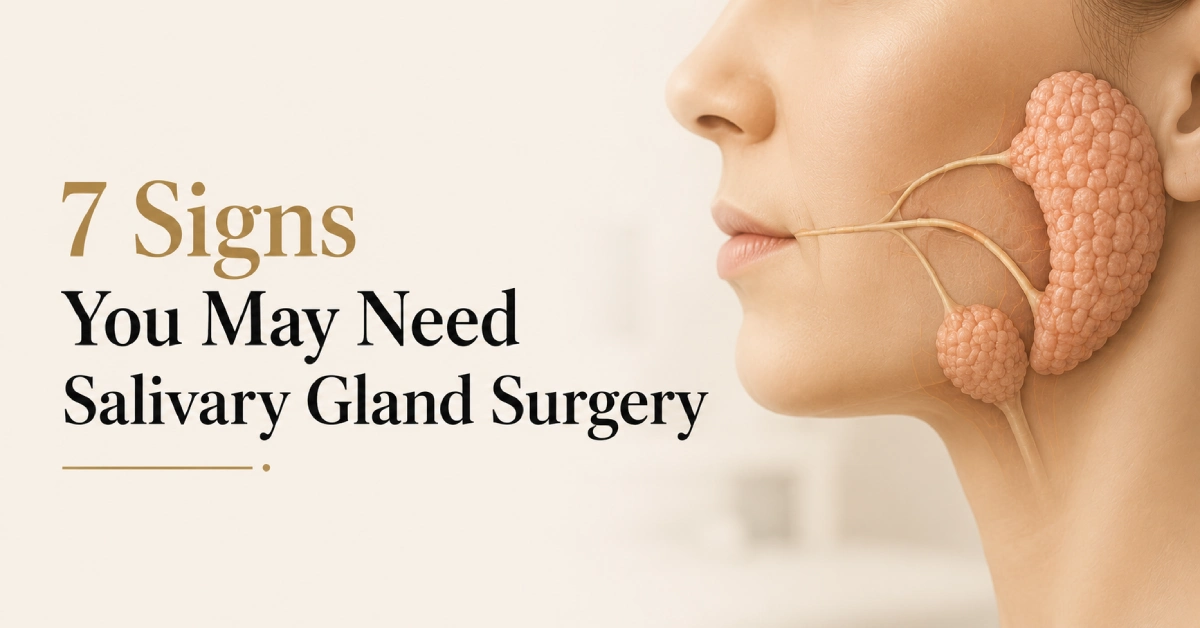
The main salivary glands are the parotid, submandibular, and sublingual glands. Several factors can contribute to these conditions, including blockages caused by stones, infections, cysts, tumours, and inflammation. In many cases, proper treatment will help prevent the disease from progressing further.
If there’s no real change after treatment, surgery might be needed to restore the normal function of your glands. Are you searching for the best salivary gland treatment in Mumbai? Then Dr. Mukul N. Padhye is the best option. He offers the best treatment for his patients.
1. Unrelenting Swelling of the Salivary Glands
One of the most common symptoms is unrelenting swelling around the jaw, cheeks, or chin. Swollen salivary gland symptoms are often worsened during meals because saliva production increases. Common signs include,
- Tenderness around the affected salivary gland
- Swelling of the face or neck region
- Pain while chewing food
- Unrelenting swelling
Unrelenting swelling may indicate obstruction, infection, or a glandular lesion requiring surgical investigation.
2. Constant Pain While Eating
Constant pain when eating shows obstruction of the salivary ducts. When the flow of saliva becomes hindered, pressure builds up in the salivary glands resulting in pain.
Common blocked salivary gland symptoms include
- Intense pain while eating
- A feeling of pressure around the salivary gland
- Transient swelling while eating
- Difficulties in eating some kinds of foods
These symptoms should be investigated further if they recur repeatedly.
3. Frequent Salivary Gland Infections
Recurrent salivary gland infections may be a sign of something more serious that could require surgery. Usually, this kind of thing happens when saliva doesn’t drain properly so certain spots become favourable for bacteria to multiply.
Common salivary gland infection symptoms include redness and swelling. Antibiotics can temporarily alleviate these symptoms, but recurrent episodes may gradually wear down the glands. Then surgery may be considered to remove or eliminate whatever blockage is resting inside the glands, sort of like an impediment that just won’t go away.
4. Presence of Salivary Gland Stones
Salivary gland stones can pose a problem because they are mineral deposits that form within the ducts. In some instances, when the stones are not very large, they can pass on their own, while others may require non-surgical management. If the size is too large, it will cause constant pain and swelling.
People often notice salivary gland stone symptoms such as pain, especially during meals. When the stones are too big or sit too deeply in place, surgical removal can become the most effective route, mainly to stop further issues and to bring back normal function of the gland.
5. Difficulty Swallowing or Speaking
Disorders involving the salivary glands can affect nearby tissues and disrupt normal oral function. With increasing swellings or growths, there would be increased pressure affecting the ability to swallow and talk.
You may notice symptoms like
- A feeling as if something is stuck in the throat
- Trouble swallowing food
- Changes in voice quality
- A kind of discomfort when speaking
If these symptoms don’t resolve, surgical intervention might help reduce pressure and restore more normal function.
6. Development of a Lump or Mass
Any growth or lump near the salivary glands warrants investigation from a medical expert. Though most growths on salivary glands are benign, some might develop into cancer or could already be cancer.
The patient may notice a painless growth near the face, especially the jawline, cheek area, or neck. Other signs include numbness or weakening of the facial muscles, along with other physical signs. Diagnostics may be necessary to determine whether the lump is benign or malignant, and surgery may be done to remove it.
7. Inadequate Saliva Secretion Causes Dry Mouth
Saliva is essential for oral health and for preventing infections. Chronic dry mouth can occur when salivary glands are damaged or affected by long-standing disease.
Individuals may experience difficulty with speech and swallowing, as well as tooth cavities and periodontal diseases. If all other methods have been unsuccessful in increasing saliva production and radiography results indicate gland injury, surgery may be considered.
Diagnostic Methods Prior to Surgery
Prior to surgical intervention, the following diagnostic methods are usually done to determine the underlying cause of salivary gland disease:
- Physical Exam
The physician conducts a physical examination of the gland and surrounding area for signs of swelling or other abnormalities.
- Imaging Tests
Use of advanced imaging tools, such as ultrasound, CT, and MRI, to detect stones, tumours, and obstructions within the gland.
- Sialendoscopy
This procedure involves inserting a tiny camera into the salivary gland ducts to improve visualisation.
- Biopsy
A biopsy is needed to check whether the lesion is malignant.
Conclusion
Early identification of signs of salivary gland disease could lead to appropriate treatment and prevent potential complications. If you have issues with frequent swelling, pain during consumption, recurring infections, dryness of the mouth, or symptoms related to the occurrence of salivary gland stones, then it is highly recommended that you seek proper medical assistance at once. Ignoring your problem will lead to serious repercussions and significantly deteriorate your dental health.
If you are having difficulty managing these symptoms, you should consider visiting Dr. Mukul N. Padhye, a reputable and experienced maxillofacial surgeon in Mumbai. As a specialist in salivary gland treatment, he will provide effective solutions to address this health issue. Book your appointment and have the best treatment!