Table of Contents
Although a blow to the face may appear minor at first, underlying injuries may not be immediately apparent. Prompt medical evaluation can help identify hidden damage and reduce the risk of complications. Skin, tooth, jaw, nerve, and even facial bone damage is possible, and therefore an early examination becomes necessary.
Ignorance on the part of patients regarding pain or swelling often leads to delayed diagnosis. Recognising the jaw fracture symptoms will enable early diagnosis by doctors and will avoid any complication that could occur.
Getting examined by an oral and maxillofacial surgeon in Mumbai after suffering from any significant facial injury ensures that undiagnosed damage is detected early.
Understanding Facial Trauma
Facial trauma refers to any injury affecting the skin, muscles, teeth, jaws, or facial bones. These injuries may range from minor cuts and bruises to severe fractures requiring immediate medical care. Common causes include:
- Road traffic accidents
- Sports injuries
- Falls
- Injuries at work
- Physical assault injuries
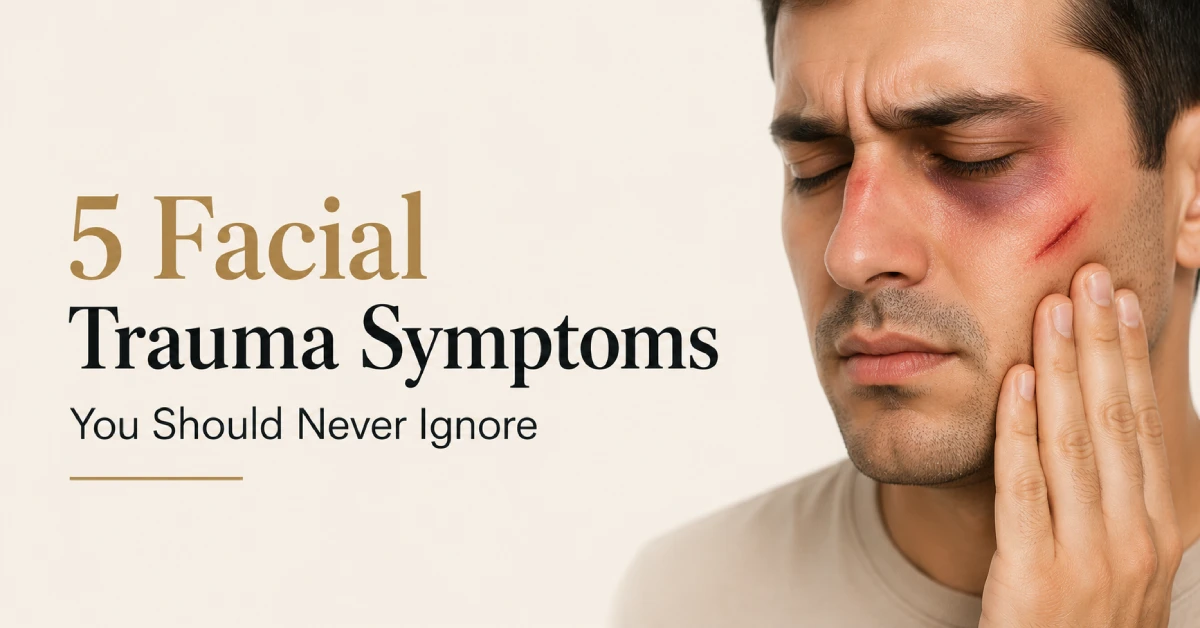
There are some obvious injuries that are very easy to spot while other injuries can be difficult to see under the swelling or bruising. Some of the common facial injury symptoms are pain, bleeding, swelling, change in face shape, numbness, inability to move the jaw, and damaged teeth.
Symptoms of Facial Trauma
Here are the 5 major symptoms of facial trauma.
- Persistent Pain and Swelling Deserve Medical Attention
Swelling and pain are normal responses to a trauma to the face, but should eventually reduce with time. Continuous swelling that continues to increase in size, does not go down or causes more pain could indicate an injury.
A persistent facial swelling aft injury could be caused by fracture, deeper tissue damage, or even internal bleeding which should be evaluated. Any delay might lead to further worsening of the condition since the swelling would have more time to settle down before any remedy is undertaken.
- Trouble Moving the Jaw May Point to Underlying Damage
The opening and closing of your mouth must remain easy and not be painful after you have had an injury. The inability to move, locking or clicking might imply that the jaw joint or bone has been affected. This problem is commonly seen in the symptoms of jaw fractures especially after impact to the face.
Activities like eating, speaking and even yawning might prove to be difficult. Getting a medical checkup will help diagnose if the jaw is displaced or broken.
- Loose or Missing Teeth Should Never Be Ignored
Strong impacts frequently affect the teeth and supporting structures. The tooth could be either loose, fractured, malpositioned, or displaced. Quick response is essential since this will increase the likelihood of retaining the damaged tooth while reducing the possibility of infection.
Any injury in relation to the teeth indicates that there must have been some sort of force acting on the face. The evaluation process will help identify any additional signs of facial trauma.
- Numbness Can Mean Nerve Injury
Decreased sensation of the mouth, cheeks, chin, or gums cannot be taken lightly. The occurrence of tingling or numbness frequently happens following trauma as there is compression, stretching, or injury of nerves near the area during the time of impact.
Sensations can either happen right away or gradually within hours after trauma. Facial trauma that presents decreased sensations must be immediately evaluated for proper care as failure to treat nerve injury will cause permanent numbness.
- Changes in Your Bite May Reveal Hidden Bone Fractures
The teeth in your upper jaw and those in your lower jaw must match when you bite down or chew. If you have problems closing your mouth or feel that your teeth do not meet anymore, then there is a possibility that your bones have become displaced.
This usually happens following an injury to the jaw or other facial bones. Doctors evaluate facial fracture symptoms through a detailed physical examination and appropriate diagnostic tests.
How Doctors Diagnose Facial Injuries
To diagnose an injury to the face, it is necessary to know how the injury was sustained and what symptoms the patient experiences. A comprehensive clinical evaluation will help to understand the degree of the damage sustained and any possible hidden injuries.
In the course of the examination, physicians usually assess:
- The condition of airways, respiration, and blood circulation
- Any active bleeding or deep injuries to the face
- Vision impairments and eye injuries
- Evidence of brain trauma or concussion
- Possible neck and spinal injuries
Radiological tests are often ordered to prove the diagnosis and estimate the severity of bone or soft tissue injuries. These include:
- X-rays to identify simple fractures
- CT scans for detailed images of facial bones and complex injuries
- MRI scans to assess soft tissues, nerves, ligaments and muscles
Individuals with cheekbone fracture symptoms will need specialised imaging as the condition involves the cheeks and eye sockets which not only have an impact on aesthetics but also on eyesight.
Based on the diagnosis, individuals can be referred to different specialists depending on their needs such as oral and maxillofacial surgeons, dentists, ophthalmologists, or ENT specialists.
Possible Complications and When to Seek Specialist Care
Undiagnosed and untreated facial injury will be associated with serious complications, which will be functional and cosmetic in nature.
Examples of complications are:
- Infection of the facial wound
- Persistent bruising or bleeding
- Altered appearance of the face
- Numbness due to nerve damage
- Vision problems
- Difficulty chewing, speaking, or opening the mouth
Seek immediate specialist care if you notice:
- Swelling which is either persistent or worsening
- Severe pain in the face or jaw
- Bleeding from the gums following an injury
- Jaw becomes stiff, locks or makes a clicking sound
- Knocked out, loose or fractured tooth
- Sores in the mouth that fail to heal
- Difficulties biting or chewing normally
Early facial trauma treatment in Mumbai is essential in restoring facial functions and preventing further problems.
Final Words
Failing to pay attention to the problem can result in issues that affect one’s appearance and function. Persistent pain, numbness, trouble eating, swelling or changes in the bite cannot be considered a normal result of an injury.
An evaluation from a skilled oral and maxillofacial surgeon in Mumbai can help detect and resolve these symptoms of facial trauma before they worsen. Dr. Mukul N. Padhye, known for his 30+ years of experience in oral and maxillofacial surgery, offers treatment for complex facial injuries.
Contact him for your consultation today!