Table of Contents
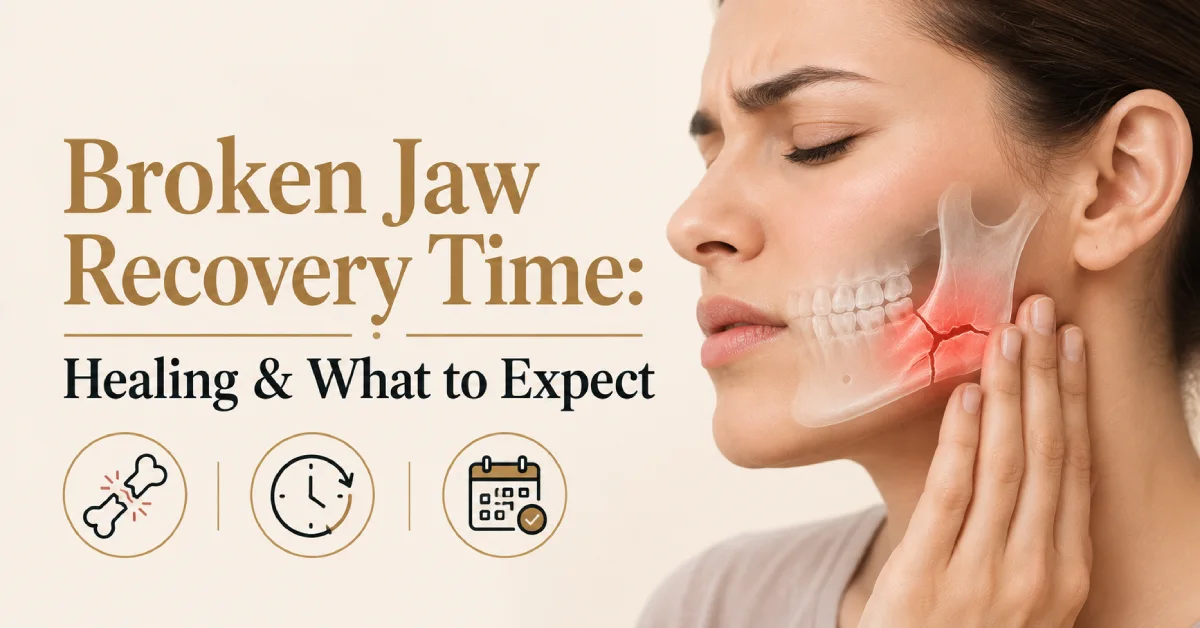
A jaw fracture, also called a mandibular fracture in medical terminology is painful and can interfere with tasks such as eating, speaking, and moving the mouth.
A jaw fracture recovery depends on several factors, including the nature of the fracture, the fracture site, bone displacement, the type of treatment provided, and the overall health of the individual. A simple jaw fracture can heal within a few weeks.
Understanding the healing period for a fractured jaw is crucial because it provides insight into what to expect during recovery. It is crucial to follow the treatment recommendations provided by specialists in the field, as jawbone fractures should heal properly. Let us dive in to know more!
How long does it take to recover from a broken jaw?
The jaw fracture recovery time takes around 6 to 8 weeks to heal and to get completed. But the healing period varies from person to person. Healing begins within the first few weeks and it takes longer for your jaw to regain full strength and movement and for the surrounding tissues to heal completely.
Factors influencing the healing process include:
- Type and location of fracture
- Displacement of fracture
- Number of fractures
- Age and the general health of the patient
- Tobacco use and/or smoking
- Oral hygiene
- Nature of treatment received
- Compliance with treatment instructions
- Infection or other facial fractures present.
Are you looking for the best doctor for orthognathic surgery in Mumbai? Then Dr Mukul Padhye is the right choice. Dr Mukul Padhye can provide an estimate based on an assessment of your injury and imaging results.
What Happens After Jaw Fractures?
The first step in treatment focuses on healing the fracture and controlling symptoms. Symptoms may include soreness, swelling and stiffness of the jaw, as well as bruising, bleeding, or difficulty biting.
You need to know the signs of orthognathic surgery to ensure you receive the appropriate treatment at the right time. Your healthcare professional will often check your jaw and get imaging studies to assess the position and severity of the fractures.
During this period, patients will need to:
- Rest as much as possible and try not to move your jaw more than necessary.
- Follow the pain-management guidelines explained by your doctor
- Apply cold packs to reduce swelling.
- Eat foods in line with treatment requirements.
- Keep your mouth clean.
- During the course of treatment, do not smoke and drink.
- Go to follow-up appointments.
Broken Jaw Recovery Timeline
While everyone’s healing process is unique, a general broken jaw recovery time can give you an idea of what to expect.
Week 1: Pain and Swelling
The first week following a jaw fracture may be one of the most painful stages of your healing process. You will likely feel pain and swelling for several days. This may eventually begin to reduce as your healing process begins.
Your doctor may prescribe pain and swelling related medicine, recommend use of ice packs on your face and elevating your head when at rest to reduce the pain and swelling. Additionally, eating will be hard as your jaw may have been wired, immobilized or operated. You may need to be on a liquid diet for a while, according to your surgeon’s recommendations.
Weeks 2-3: Initial Healing
The swelling and pain may become less severe. However, you may still have jaw stiffness or pain. One should not assume that the absence of pain means the bone has healed. At this point, the fracture is still vulnerable to injury, and you need to stay away from foods that are difficult to chew, too much jaw movement, and activities that can lead to more injuries to the face until a medical practitioner instructs you otherwise.
Patients must attend their follow up appointments since it’s crucial for the medical staff to check how they are healing and whether the jaw is healing in the right alignment.
Weeks 4-6: Bone Repair
The strength of the fracture improves. Usually there is improvement in discomfort and jaw function but chewing is still limited.
The diet may be modified by the medical practitioner depending on the treatment and the healing process of the patient. Some people can progress from drinking liquids to eating soft foods and ultimately a regular diet gradually.
Allowing additional strain on a healing jaw can delay recovery. Hence, it is important not to go against your dietary recommendations.
Weeks 6-8 & Onwards: Functional Recovery
After six to eight weeks, most uncomplicated bone injuries will be largely healed. This doesn’t, however, mean that everything else is healed.
Jaw stiffness and even the limited ability to open the mouth can persist for some time. The patient may need exercises or other types of therapy to regain proper function.
A healthcare professional must decide when it’s safe to resume activities such as chewing, exercising, and contact sports.
Diets to Follow During Fractured Jaw Healing
Meal consumption plays a major role in broken jaw recovery. Nutrient-rich choices include:
- Smooth soups and pureed food
- Yogurt and other suitable dairy items
- Smoothies (smoothies)
- Pureed Vegetables
- Soft boiled egg
- Old fashioned oatmeal
- Protein in the proposed foods
- Nutrition beverages as directed by a healthcare professional
It is essential to get enough calories, protein, vitamins, and minerals without putting extra pressure on the recovering jaw. Patients should avoid hard and chewy foods until they are advised that such meals are safe.
Wrapping It Up
Lastly, it takes time and follow up sessions to recover from a broken jaw. Most fractured jaw recovery takes 6 to 8 weeks but recovery time varies depending on the severity of the damage and the patient’s health.
If you have problems like pain, swelling, difficulty chewing, a change in your bite or restricted jaw movement, consider seeing a professional like Dr. Mukul Padhye for an expert opinion.
Dr. Mukul Padhye is an experienced oral and maxillofacial surgeon based in Mumbai and treats all types of jaw and facial bone fractures. Dr. Mukul Padhye offers the best treatment for his patients. He specialises in orthognathic surgery, facial trauma, and dental implants which makes it possible for him to provide his patients with safe and accurate surgeries. Book your appointment today and receive the best treatment!