
Table of Contents
The screening of oral cancer is an essential part of maintaining healthy teeth and a mouth, especially for individuals who are prone to developing such issues. Care is required to consider cancers due to smoking, high alcohol consumption or other predisposing diseases within the mouth.
Oral cancers in early stages may not have any symptoms, and this makes dental examination crucial for early detection. The screening process enables a dentist to examine abnormalities in the mouth and throat that may need further investigation.
Knowing the tests involved in the oral cancer screening helps you prepare. Read more to learn more about more information on oral cancer screening.
What is Oral Cancer Screening?
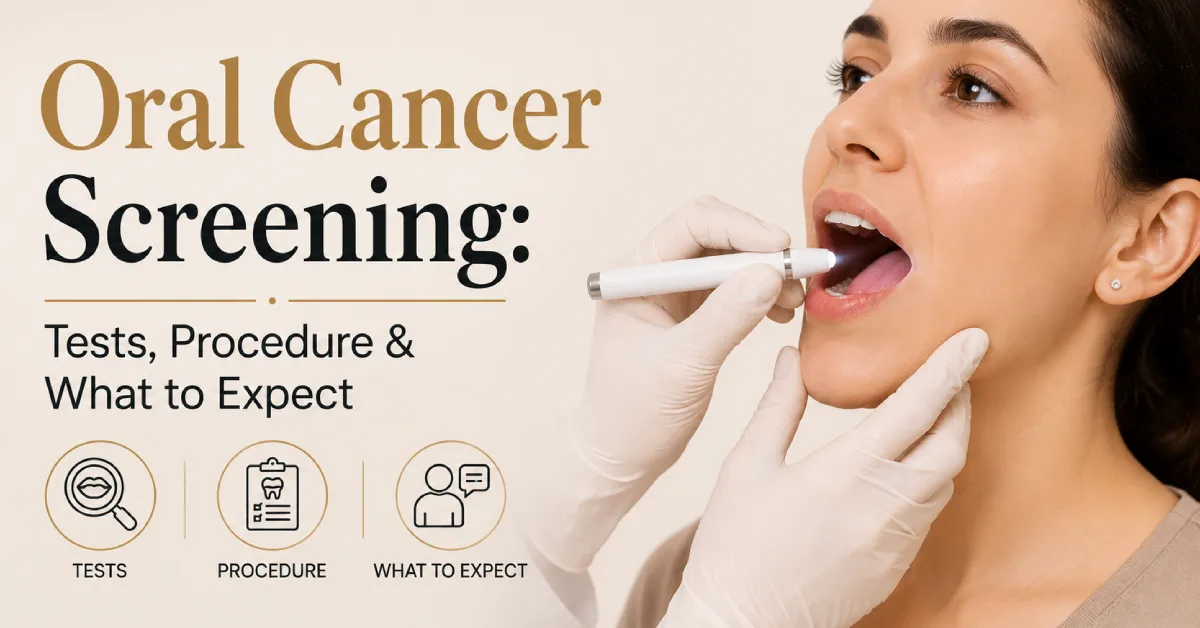
Oral cancer screening involves examining the mouth as well as the surrounding tissues for signs of cancer that might suggest the presence of cancer or precancerous changes. A dentist or oral health expert can perform an oral cancer screening during a checkup or when symptoms and risk factors are present.
An oral cancer screening test includes both a physical and visual exam of the oral tissues. A health care provider may recommend additional tests based on their findings. Screening for cancer does not show that cancer is present, since unusual findings can have other causes.
Why is Oral Screening Important?
Early detection can significantly improve the treatment outcomes for many cancer types. Some cancers occur without pain symptoms at an early stage. A patient might neglect a long-term sore, spot, swelling, or any change in tissue.
Oral screening for mouth cancer can help detect suspicious changes before they advance. The screening is essential for those with risk factors such as:
- The use of smoking and other tobacco products
- Heavy consumption of alcohol
- Previous occurrence of oral cancer
- Infection with certain types of HPV
- Heavy sun exposure, especially for lip cancer
- History of precancerous changes in oral tissues
- Age
There are also patients who have no exposure to risk factors who can still get oral cancer.
What Does an Oral Cancer Screening Check For?
During the screening test for oral cancer the doctor examines the lips, tongue, gums, inner cheeks, roof and floor of the mouth and other accessible areas.
The following symptoms may be present:
- An ulcer that does not heal
- Any abnormal whitish or reddish patches
- Abnormal swelling or any abnormal lumps
- Unusual mouth pain and tenderness
- Bleeding from the mouth with no obvious reason
- A numb feeling in the mouth or lips
- Difficulties with dentures or other dental appliance fitting
- Unusual changes in the mouth structures
Oral Cancer Examination Procedure: Step by Step
An oral cancer examination is fairly simple and can sometimes be done as part of a regular dental visit. Here are the steps of oral cancer screening.
1. Medical and Dental History
Your first visit may begin with a general examination. The oral surgeon will ask about your dental history and oral care habits. They can also make inquiries about your smoking and alcohol intake and any other observations that you have made.
Honesty and accurate information help the professional decide whether a thorough examination is needed.
2. Visual Examination
Your doctor examines your mouth, both inside and out, using appropriate lighting. They check for any abnormalities in your:
- Lips
- Gums
- Tongue
- Mouth’s inner linings
- Palate
- Under the tongue
- Throat area
3. Physical Examination
The doctor will check various parts of the mouth and throat to see if there are any lumps or anything that feels abnormal or harder than expected.
They will check for swollen lymph nodes which may not be visible but can be felt. The practitioner may move the tongue to the side to make the examination easier in areas that cannot be seen.
4. Alternative diagnostic methods
Some dental offices employ additional equipment during an oral exam. These include dye, instruments to highlight questionable tissue, and a light.
The effectiveness of these diagnostic approaches may vary and should generally be used as supplementary tools during the examination.
As the best oral and maxillofacial surgeon in Mumbai, Dr. Mukul Padhye offers the best treatment for his patients.
Oral Cancer Detection and Prevention
Detection is just one aspect of oral health care. Other ways to reduce unnecessary risk factors promote overall well-being.
These include the following:
- Do not smoke.
- Visit your dentist regularly.
- Tell your dentist about any unusual mouth symptoms.
- Eat a well-rounded diet and have good general health.
It helps to know what your mouth looks like normally. This makes it easier to notice anything uncommon in your mouth.
When Should You Seek an Oral Examination?
It is recommended that you schedule an oral examination if you notice any unusual change or persistent change in your mouth, lips, tongue, or throat:
- Persistent sore: See a dentist if a sore in your mouth lasts longer than two weeks.
- Red or white patches: Any unexplained patches should be assessed.
- Unusual lumps: Persistent lumps, swelling, or thickening should be reported.
- Bleeding without an obvious cause: This symptom needs to be assessed.
- Pain: If you have persistent pain in your mouth, jaw or throat, this must be assessed by a health care practitioner.
- Numbness: Any numbness in your lips and mouth should be assessed.
- Risk factors: Using alcohol and tobacco regularly makes this assessment even more necessary.
How Long Does the Process of an Oral Cancer Examination Take?
The duration of an oral cancer screening procedure depends on your oral health condition and whether any other additional exams are needed. If you need additional tests, the process will take longer. This is because the tests require laboratory testing or expert examination.
Conclusion
Early diagnosis is essential to avoid serious health problems. It helps you maintain good oral health. If you notice a persistent sore or other unexplained changes seek expert advice immediately. If you are looking for the best oral tumor surgery in Mumbai, Dr Mukul Padhye is the best option for you.
He has more than 30 years of experience treating oral health issues. He offers the best treatment based on your needs. Dr. Mukul Padhye and his team provide advanced and personalized treatment for oral cysts and tumors. Schedule an appointment with Dr. Mukul Padhye now!