Table of Contents
Tooth extraction is a standard procedure for dental patients, and most will not experience significant problems as they heal. However, in certain situations, the blood clot that forms at the tooth extraction site may become dislodged or may not form at all. This is called dry socket, or alveolar osteitis.
Knowing the symptoms of dry socket can help you seek proper medical assistance before it is too late. Patients undergoing wisdom tooth extraction should be aware of dry socket symptoms, since these extractions involve deep surgery and longer healing periods.
According to oral surgeons, patients should watch for unusual symptoms while healing. Let us dive into the blog to know the warning signs after tooth extraction.
What is a Dry Socket?
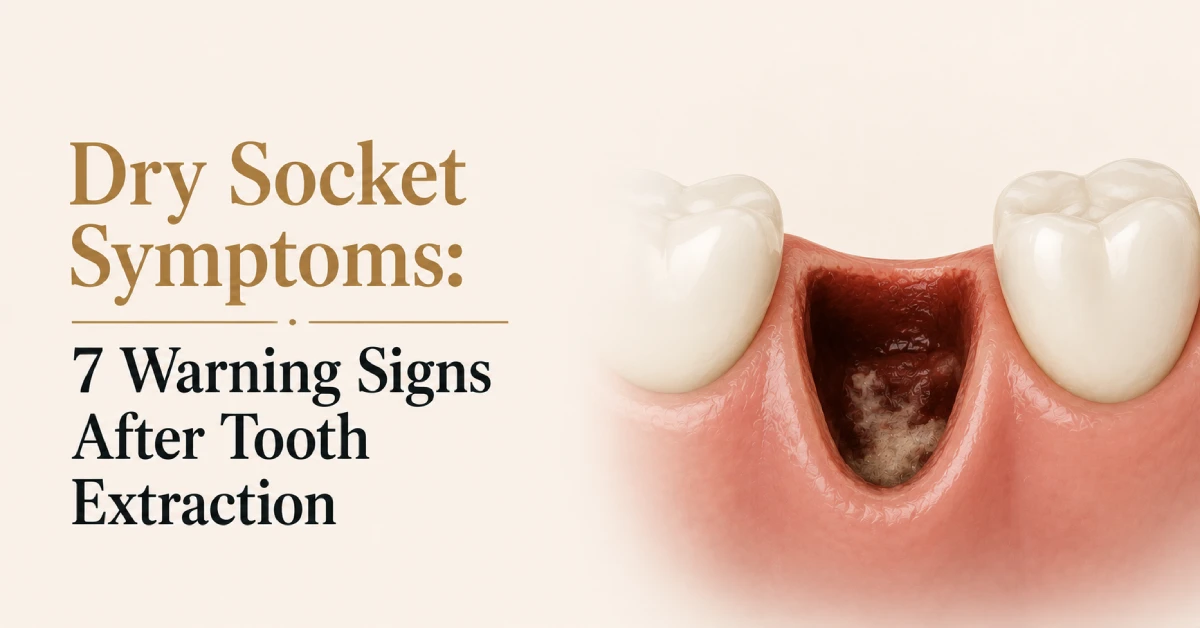
After a tooth is removed, a blood clot normally develops over the empty socket. This clot protects the underlying bone and nerves while new tissue forms. But if the clot breaks up, gets washed away too soon, or moves off, the bone and nerve ends may be exposed.
The pain from dry socket differs from normal post extraction pain and usually appears a few days after surgery. Instead of diminishing, it gets worse. Also the pain may radiate to places such as the ear, temples, jaw or neck on the side after extraction. Knowing the dry socket symptoms after tooth extraction will help you have better care.
7 Warning Signs After Tooth Extraction
Several warning signs indicate dry socket symptoms. Here are the most common ones,
1. Severe or Worsening Pain Following Tooth Extraction
One of the most common symptoms of dry socket after tooth extraction is severe pain after the procedure. You may experience a sudden increase in pain.
This pain may also radiate toward the ear and neck on the same side as the affected area. Dr. Mukul Padhye suggests that patients who experience sudden severe pain should not overlook the symptoms, as they might mean that the protective blood clot has been removed.
2. Pain that Spreads to the Ear or Jaw
Another important sign of dry socket is pain that travels outside the socket where the tooth was extracted. The patient could experience pain around the ear or even the surrounding teeth.
It is one of the most common dry socket symptoms wisdom teeth extraction. Consult an oral surgeon like Dr. Mukul Padhye immediately if you notice unusual pain.
3. Visible Bone in the Extraction Socket
Under normal circumstances, a clot forms in an empty tooth socket to protect the underlying bone and nerves. Displacement of this clot leads to the appearance of the empty socket and the exposure of whitish or yellowish bone.
Visible bone is one of the most evident tooth extraction dry socket symptoms. Patients should not touch this area with their fingers, tongues, toothbrushes, or any other objects. A dental professional must examine the area and decide whether treatment is needed.
4. Unpleasant Taste in the Mouth
A sour or nasty taste in the mouth at the extraction site might also be a symptom. People describe a metallic or bitter taste that remains long after brushing and washing their mouths.
These symptoms of dry socket after wisdom tooth extraction result from debris buildup and irritation at the exposed extraction site. It is always a good idea to practise good oral hygiene without scrubbing the socket vigorously.
5. Persistent Bad Breath
Persistent bad breath after tooth extraction can also signal a problem with the healing process. Although temporary changes in breath are common after oral surgery, bad breath with pain is always something that requires professional help.
A wisdom teeth removal dry socket symptom includes bad breath along with an unusual smell in the mouth. Nonetheless, bad breath alone does not indicate dry socket, because it can also be caused by other problems.
6. Delayed or Disrupted Healing
The healing process normally reduces pain at the tooth extraction area. Worsening pain or an inability of the socket to heal properly can be a sign of dry socket.
Dry socket after wisdom teeth removal symptoms can appear several days after the procedure. This is one reason patients need to follow all post-operative guidelines.
7. Swelling, Tenderness, or Possibility of Infection
Dry socket does not necessarily mean there is an infection. A surgeon may need to evaluate worsening symptoms to determine whether the patient has an infection or other complications.
Increasing swelling or increased tenderness may indicate another condition. Visit a doctor immediately if you notice any dry socket infection symptoms.
When Should You See a Dental Professional?
Severe pain: This could be pain that persists even after initial improvement, so you may need to consult an oral and maxillofacial surgeon.
Bone being visible in the socket: If the site looks like there is no tissue there, there may be cause for concern.
Unpleasant taste: A bitter or unpleasant taste at the extraction site may indicate dry socket or infection.
Worsening swelling: Worsening swelling instead of improvement should be evaluated as soon as possible.
Presence of fever or discharge: Fever or any abnormal discharge from the extraction site indicates infection.
Jaw stiffness or inability to open the mouth: Jaw stiffness or inability to open the mouth after extraction should be evaluated by the oral surgeon.
Dr. Mukul Padhye, as the best oral and maxillofacial surgeon in Mumbai, offers the best treatment for his patients.
Wrapping It Up
Early identification of dry socket can help you recover more easily after tooth extraction and avoid unnecessary complications. Pain that persists or increases, along with a foul taste, bad breath, visible bone, and pain that moves up towards the ear or the jaw, should be examined by a oral surgeon. Instead of relying solely on home remedies, consult an oral surgeon in these cases.
Dr. Mukul Padhye provides dental treatment professionally, emphasising diagnosis and post-tooth extraction care. Patients who have decided to get their wisdom teeth extracted in Mumbai will benefit greatly from the treatment provided by Dr. Mukul Padhye. Book your appointment today to have the best treatment.