Table of Contents
Jaw pain is often dismissed as a temporary issue. But it can sometimes indicate a problem with the temporomandibular joint (TMJ), which plays a vital role in everyday movements such as chewing, speaking, and yawning.
Disorders affecting this joint and the surrounding muscles can lead to various symptoms that extend beyond the jaw, making diagnosis challenging. Many people fail to recognise these early TMJ symptoms until they begin affecting daily life.
Understanding the common signs of TMJ disorders can help individuals seek timely care and prevent ongoing discomfort.
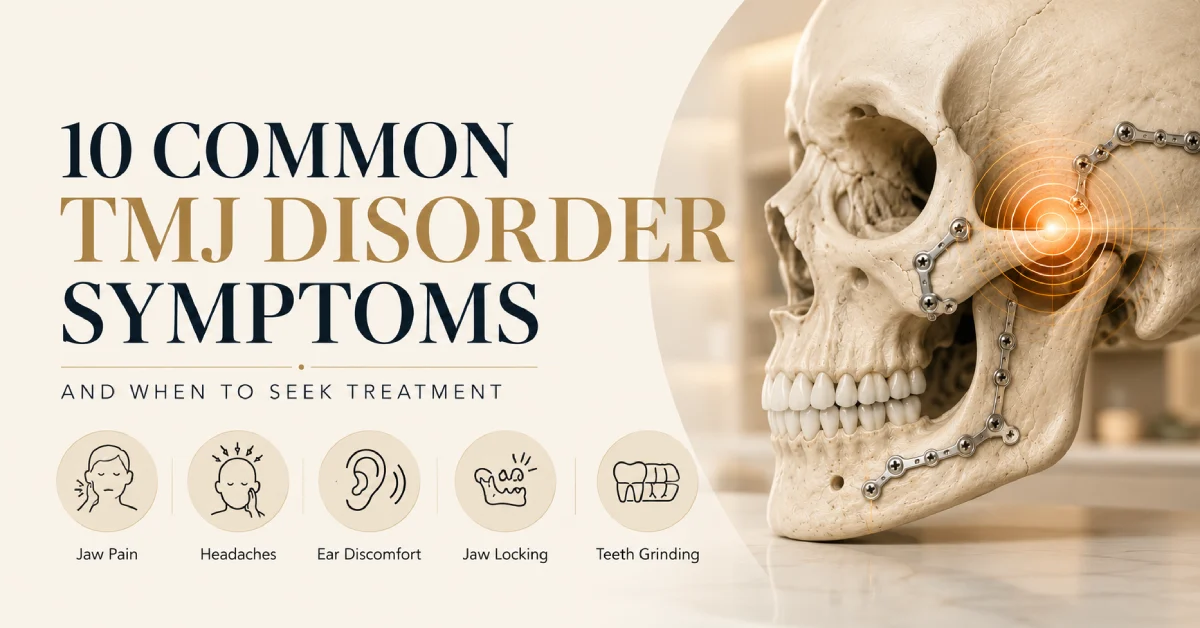
10 Common TMJ Disorder Symptoms
TMJ disorders can cause symptoms that affect the jaw, face, ears, neck, and even vision. Recognising these signs early may help prevent worsening discomfort and support timely treatment.
1. TMJ Jaw Pain
Discomfort in the jaw area is one of the most frequently reported signs of temporomandibular joint disorder. The pain may originate in the joint itself or the muscles involved in the process of chewing.
Pain sensations may vary in intensity, from minor discomfort to more serious pain, which could even persist without using the jaw. While some people may suffer from brief periods of pain, others have to endure it on a regular basis for a few weeks or months.
2. TMJ Causing Ear Pain
Ear pain is another symptom experienced by individuals with TMD because the jaw joints are located right next to the ears. When there is swelling or pressure in the joint area, there will be some sort of pain that will give an impression of a problem in the ear region.
Everyday activities such as eating, speaking, or yawning can sometimes worsen the discomfort. Muscle spasms, excessive use of the jaw joint, bad bite patterns, and trauma to the head or neck area can cause ear pain.
3. Headaches
Muscles attached to the jaw span across certain areas of the face and the head. Muscle tension can trigger headaches that closely resemble other commonly experienced headache types.
Tightness of the jaw or grinding of the teeth tends to cause further strain to the muscles, resulting in pain radiating up to the temple regions of the head. Patients typically develop headaches in conjunction with jaw pain and difficulty moving the jaw.
4. Neck Pain
Inflammation related to the temporomandibular joint may spread to other surrounding muscles and nerves. The pain may extend to the neck, creating an aching sensation there. It will appear mainly on the side that suffers from TMJ, and will be exacerbated by particular jaw movements.
Significant neck discomfort may be present even in the absence of noticeable swelling or skin discolouration during a medical examination. Neck pain can become an important clue among the various sign and symptoms of TMJ disorders seen in clinical practice.
5. Locked Jaw
A locked jaw occurs when the joint is displaced, resulting in limited jaw mobility. A few individuals will experience difficulty in closing their mouths, thus resulting in painful and uncomfortable situations that impair speaking or eating.
This condition requires proper medical intervention to achieve proper joint positioning. Anaesthesia and muscle relaxation with specific drugs are methods used to manage pain during medical interventions.
6. Malocclusion
Malocclusion involves improper positioning of the upper and lower teeth. Individuals suffering from TMJ problems could experience a sudden change in the feel of their bite. Improper alignment increases the risk of inadvertently biting one’s tongue or cheeks during normal activities.
Depending on the severity of the bite issue, a dentist may recommend orthodontic treatment, selective tooth adjustments, or other appropriate corrective procedures.
7. Clicking Sound
The clicking or popping sound when one moves their jaw is among the commonly known signs of the TMJ condition. The popping or clicking sound can be made while one chews, talks, opens their mouth wide when eating or yawns.
Some people hear this popping without any associated pain, whereas others feel pain together with the popping sound. This could be accompanied by other signs such as face, teeth, ear pain or neck pain.
8. TMJ Vertigo
Issues involving the jaw joint can sometimes contribute to symptoms that affect areas located near the ear. Changes in pressure and muscle spasms in the area could be associated with dizziness and spinning sensations that are individual experiences.
There is also the possibility that there are problems with the inner ear that are causing the incorrect messages. Successful treatment of the jaw condition frequently improves these symptoms. Dizziness can occasionally appear among reported TMJ nerve damage symptoms in some affected individuals.
9. Taste and Smell Disorders
The link between the occurrence of TMJ-related pain and altered sensations of taste and smell has been studied as well. People have reported that food tastes different from before, or that they have trouble detecting certain smells.
Despite being less frequently reported, this symptom can still have a noticeable impact on a patient’s daily life. Sensory alterations can be seen along with other symptoms of TMJ problems.
10. Eye Pain
TMJ disorders may affect nerves or muscles in the area surrounding the eye region. There can be pain around the eye, pressure, and blurring of vision. The eye pain can be intense and disrupt daily tasks that require good vision.
Proper diagnosis is necessary since such symptoms may also arise due to allergic reactions, infections, and neurologic problems. In some cases, there can be eye complications with other TMJ disorder symptoms.
When to See a Doctor
Chronic jaw pain is not something to be taken lightly, particularly if it begins interfering with your everyday tasks. Contact your doctor if you are experiencing any of the following problems:
- Chronic or increasing jaw pain
- Problems opening or closing your mouth
- Frequent jaw locking episodes
- Severe headaches
- Ear pain without an obvious cause
- Dizziness or balance problems
- Alterations in your bite alignment
An expert TMJ specialist in Mumbai will be able to determine the root cause of these symptoms and advise you accordingly for effective treatment.
Conclusion
The symptoms of TMJ disorders do not necessarily remain confined to the pain in the jaw. Rather, there are additional symptoms involving the ears, neck, head, eyes, and even the sense of taste or balance. Early identification of these symptoms helps in preventing further pain and provides effective treatment.
Dr. Mukul N. Padhye, an experienced oral and maxillofacial surgeon in Mumbai with over 30 years of expertise, offers comprehensive care for TMJ-related conditions. Patients experiencing persistent TMJ symptoms should consider consulting Dr. Mukul N. Padhye for an accurate diagnosis and personalised treatment plan.